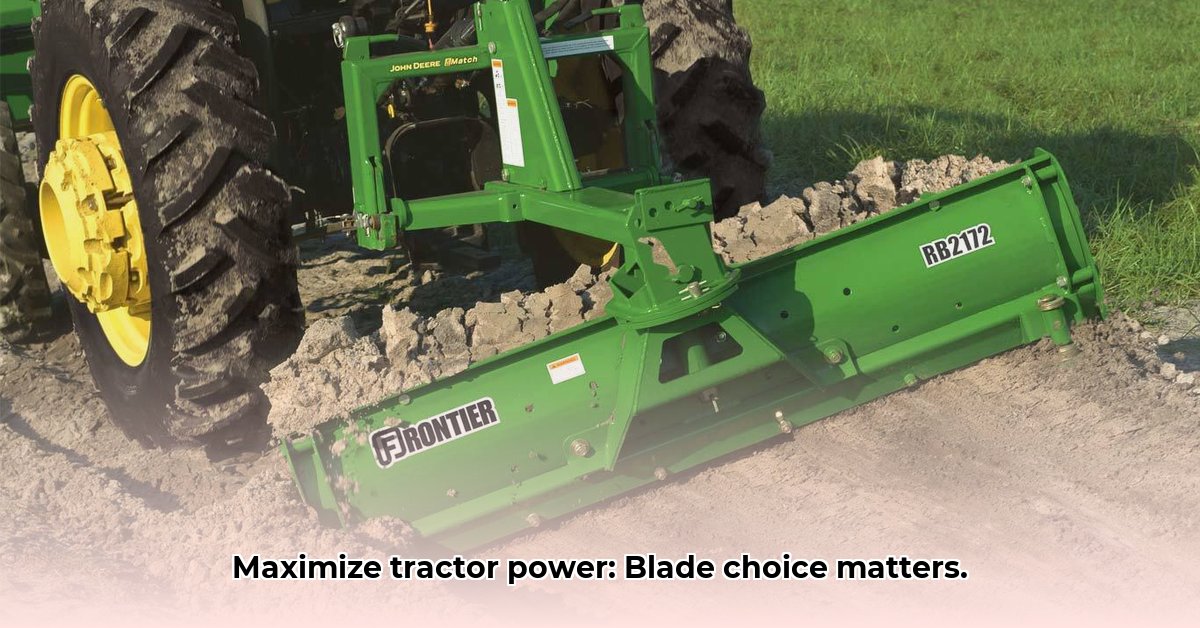
Choosing the right rear grader blade for your tractor significantly impacts efficiency and productivity. This guide helps you select the ideal blade based on your specific needs and budget, covering various features, materials, and applications. For more information on tractor blades, check out this helpful resource: Tractor Blades.
Understanding Your Needs: Matching Blade to Job
Before selecting a blade, consider its intended use. Are you leveling fields for planting, cleaning ditches, or managing snow removal? Different tasks require different blade types. For instance, delicate landscaping projects necessitate a smaller, more precise blade compared to the heavy-duty demands of land clearing.
Key Features Comparison: Hydraulic vs. Manual Actuation and Blade Materials
The selection process hinges on several key features, including blade size, material, and actuation system. The following table summarizes these critical factors:
| Feature | Manual Actuation | Hydraulic Actuation |
|---|---|---|
| Initial Cost | Lower | Higher |
| Ease of Use | Requires more physical effort; slower adjustments | Easier and faster adjustments; less physical strain |
| Maintenance | Generally simpler | More complex; may require specialized knowledge |
| Versatility | Fewer adjustment options | More precise control and adjustment options |
| Best Suited For | Smaller projects, infrequent use | Larger projects, frequent use; increased efficiency |
| Typical Blade Materials | Mild steel, High-strength steel | Mild steel, High-strength steel, Hardox 450 steel |
Blade Material: Durability and Lifespan
Blade material significantly impacts durability and longevity. Hardox 450 steel, a premium option, offers exceptional toughness and wear resistance, leading to longer lifespan and reduced replacement costs in the long run. While the initial investment is higher, the extended usability and reduced downtime often outweigh this cost for frequent, heavy-duty use. Lower-cost materials may seem economical initially, but their shorter lifespans can negate apparent savings over time. Consider the total cost of ownership (TCO) when comparing options.
Actuation Systems: Manual vs. Hydraulic – A Detailed Comparison
The actuation system defines how the blade is controlled. Manual blades rely on levers and pins, requiring significant physical effort and resulting in slower adjustments. Hydraulic systems utilize hydraulic cylinders controlled from the tractor seat, providing precise, effortless control and faster adjustments, minimizing operator fatigue, and boosting efficiency. While hydraulic systems incur higher upfront costs and may require specialized maintenance, the time and labor savings are substantial for large-scale operations or frequent use.
Different Applications, Different Blades: Tailoring Your Choice
The ideal blade type varies considerably depending on the application. Smaller blades are suitable for landscaping or minor grading tasks, while large-scale land leveling benefits from larger, more robust blades designed for heavy-duty work. Snow removal requires specialized blades optimized for snow clearing, not to be confused with standard grading blades. Matching blade size and type to the task at hand is crucial for optimal performance and efficiency.
Making Your Decision: A Step-by-Step Guide
Selecting the right rear grader blade involves a careful assessment of several factors:
- Define Your Needs: Clearly identify the primary applications for the blade. This will determine the necessary size, durability, and features.
- Assess Your Budget: Set a realistic budget, considering both initial purchase price and potential long-term maintenance and replacement costs.
- Evaluate Actuation: Decide between manual and hydraulic actuation based on your budget, frequency of use, and desired control precision. Hydraulic systems are generally more efficient for larger projects.
- Choose Blade Material: Select the blade material based on the intended task and desired durability. Hardox 450 steel offers exceptional longevity but comes at a higher cost.
- Consider Additional Features: Assess the need for features like adjustable tilt, offset, and blade angle for increased versatility and efficiency.
- Compare Manufacturers: Research different manufacturers and compare their offerings, warranties, and service support.
- Check Tractor Compatibility: Ensure the chosen blade is compatible with your tractor's specifications, including horsepower and lift capacity.
Conclusion: Maximizing Efficiency Through Informed Choice
Choosing the right rear grader blade is an investment in increased efficiency and long-term cost savings. Carefully evaluating your needs, budget, and operational requirements will lead to an informed decision that optimizes your tractor's performance and minimizes operational costs. A well-chosen blade translates to less time spent on tasks and more time dedicated to other essential farm work, maximizing productivity and your farm's profitability.